Workshop on status and power positioning in teams
facilitated by Bogdan Grigore · founder & lead facilitator Improvizatie.ro
Every interaction is a status game. We learned to see it from Keith Johnstone. You learn to read and consciously adjust your status: when to raise it, when to lower it, in negotiations, meetings and conflicts. Facilitated by Bogdan Grigore, since 2008.

Who it is for
- Leaders who want meetings where people actually speak, not just nod.
- Negotiators who want to read and consciously adjust the power dynamic in a discussion.
- Salespeople who need to inspire trust without their team seeming arrogant or insecure.
- Recently promoted managers who feel that "their status is not taken seriously" by former peers.
- Leadership teams who want to understand why certain meetings always get stuck in silence.
- Anyone who wants to understand the mechanism behind charisma and presence, not just imitate them.
Read more: Improvisation for Leaders: what the game actually trains (in Romanian) →
Example exercises
- Status: the source exercise for this entire page, inherited directly from Keith Johnstone. Participants practise different power positions through play (voice, posture, eye contact, speech rate) to learn to consciously choose their status according to context, not just endure it.
- Status Reversal: you train the "switch": to change your status on command, in the middle of a scene. In triads, two players each receive a role with fixed status, the third directs and shouts "SWITCH", at which point both instantly reverse their position. Scenarios are written around the participants' real industry, job and challenges, not generic situations.
- My Status Map. Personal transfer, in writing: each participant maps their status reflexes (who they automatically go up with, who they go down with, where it has cost them) and chooses a single concrete behaviour to change in a situation in the next two weeks.
- Status in a Single Line: trains fine adjustment, not extremes. Two participants have a mundane dialogue (an office request, a corridor meeting), where each line must slightly raise or lower the speaker's status compared to the previous line.
- Status in Motion: the group splits into Team A and Team B, who cross the space at the same time, without knowing what status they have been assigned. Team A receives high-status cues (sustained eye contact, rare glances, steady steps), Team B receives low-status cues (head down, hesitant glances, taking up as little space as possible). Debrief, then the teams swap roles and repeat.
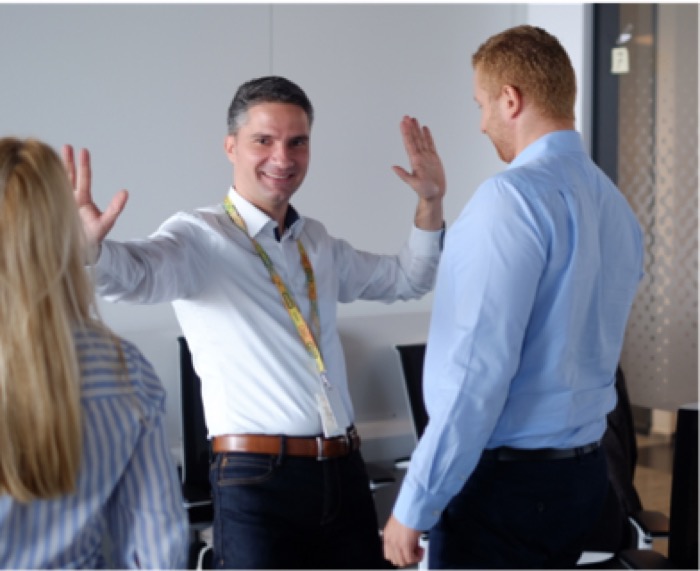
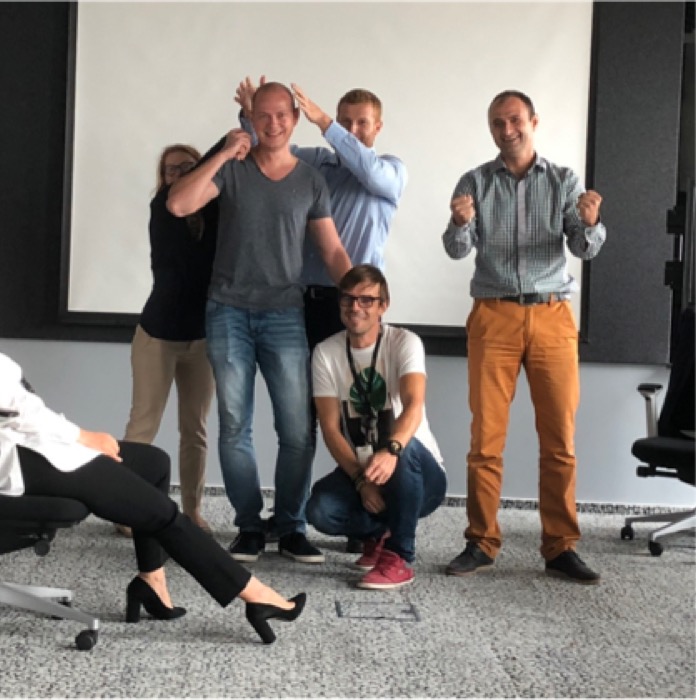
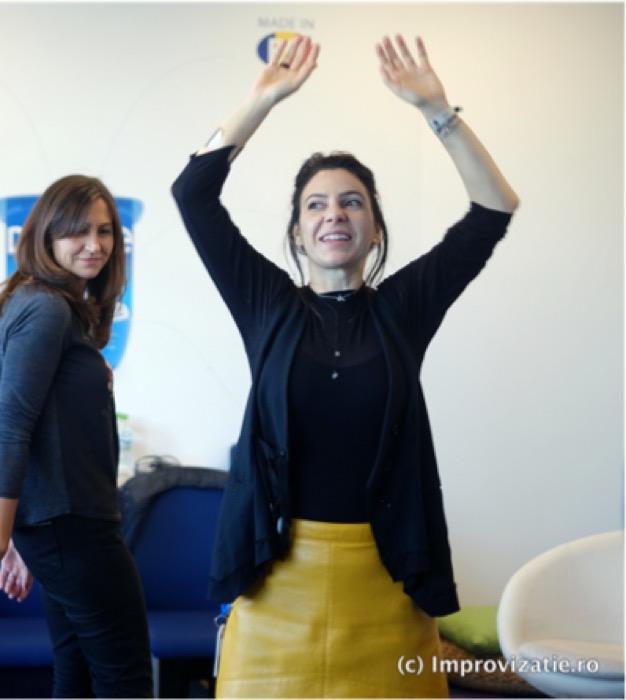
What a session looks like
| Duration | Price | Number of participants | Space required | Online or in person | What you get afterwards |
|---|---|---|---|---|---|
| 3 hours: for development programmes, sessions are repeated periodically | 1000€ / session | from a small leadership team (4-8) to a larger cohort of leaders or negotiators (up to 12, the reference group) | a room clear of furniture, where people can move | both, at the same price | professional photos + debrief on the real power dynamic in the team |
| Option 2 (recommended): 3-hour workshop + 2-hour follow-up session, to consolidate and discuss concrete situations where they applied it | 1500€ / package | from a small leadership team (4-8) to a larger cohort of leaders or negotiators (up to 12, the reference group) | a room clear of furniture, where people can move | both, at the same price | professional photos + debrief on the real power dynamic in the team |
What it is NOT
- It is not manipulation: the aim is awareness of the mechanism, not using it covertly against someone.
- It is not comedy theatre. Although status exercises are often funny, the aim is to observe behaviour, not to put on a show.
- It does not mean "high status is always desirable": we train flexible status, not permanently high status.
- It is not abstract leadership theory: we work concretely, through play, on posture, voice and observable behaviour.
Frequently asked questions
What is status in improvisation?
It is how posture, voice, eye contact and speech rate communicate power or lack of power in an interaction, a concept described by Keith Johnstone, independent of a person's formal rank.
Can status be trained?
Yes. It is trained through play exercises where participants consciously try high status and low status, so they feel the mechanism from the inside, not just read about it in others.
Is working on status a form of manipulation?
No, it is awareness, not manipulation. The aim is to notice how status already works in your interactions, so you can adjust it intentionally, not use it covertly against someone.
What does status have to do with charisma?
Charisma is often confused with permanent high status. In fact, people perceived as charismatic shift their status fluidly according to context (sometimes high, sometimes low), they do not keep it fixed.
Why does no one speak in meetings when the boss is present?
Because the boss's high status, even when unintentional, raises the perceived stakes of every contribution: people stay silent to avoid the risk of even lower status in front of the group.
Is it also suitable for sales teams or negotiators, not just leaders?
Yes. Status is just as relevant in negotiation and sales: knowing when to lower your status to put the client at ease, or when to raise it to inspire trust, is a directly transferable skill.